
Components
The repository archiver
Archives a declared repository's metadata into the vault, so a meeting can ask what changed since it last met.
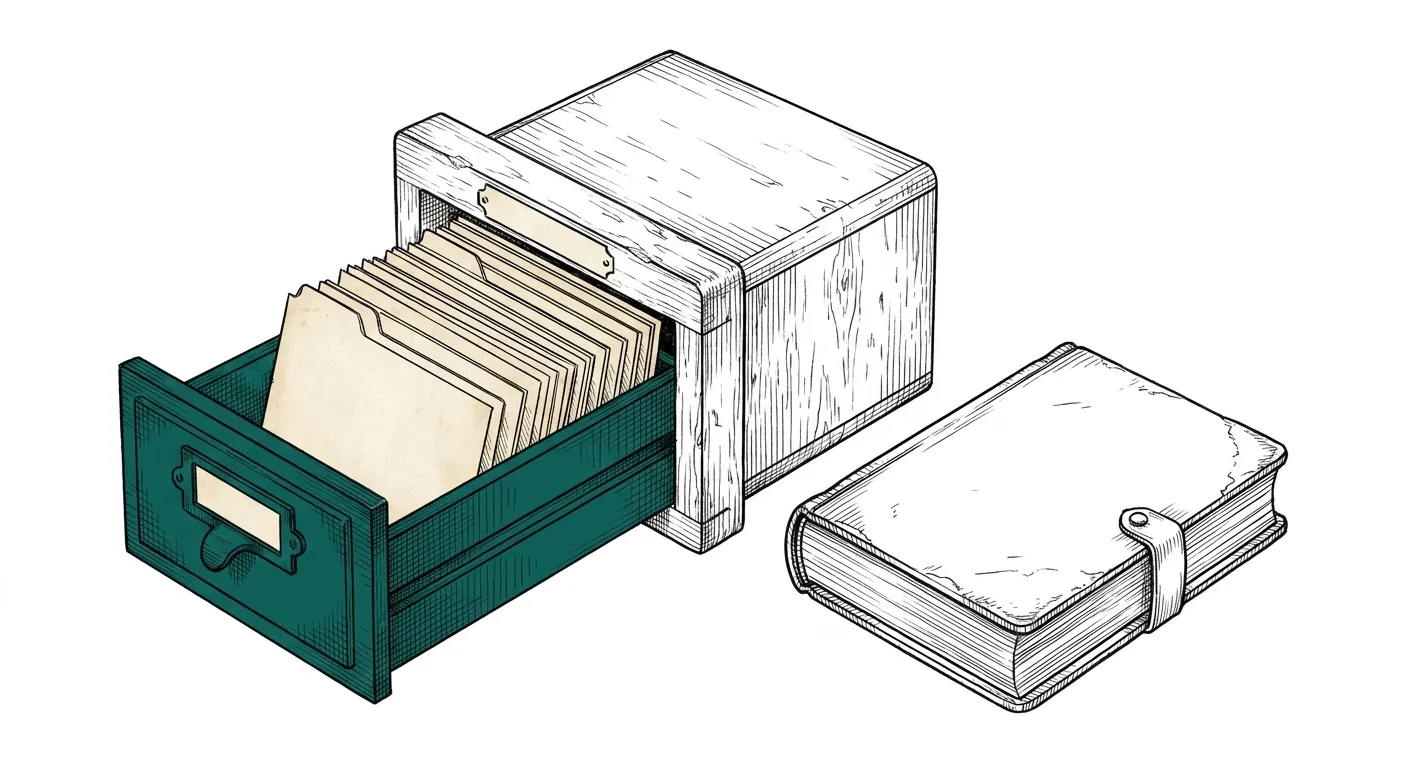
A recurring meeting has a question it asks every time and rarely answers well: what actually shipped since we last spoke?
The archiver answers it by keeping a copy of the traces — issues, releases, commit subjects — in the vault, next to the notes. Not because the information is hard to find, but because finding it during the meeting means opening a browser, and the answer arrives after the moment it was needed.
Metadata only, never the code
This is the rule that makes the whole thing acceptable rather than alarming. A vault holds the record of work, not the work. The archive knows a pull request existed, what it was called and when it merged. It does not hold a line of the source, and it never will.
That is the same distinction the chain makes everywhere: from systems, take the traces; from conversations, take what was said. An issue has a home already. A conversation does not.
It carries no credential of its own
It reaches the hosting platform through a command-line tool the user is already signed in to. No token in a configuration file, nothing to rotate, nothing to leak. A second authentication path for one account is a second thing that can go wrong, and it was not worth the independence.
What it will and will not fetch
Only what a folder’s own configuration declares. The tools never write that block — a person does. Nothing is archived because it was reachable.
This part is not published
A local command-line tool in a private repository.
Declared in the contract Not published
- Kind
- local CLI, run on demand or on a schedule
- Role
- Archives a declared repository's metadata - issues, releases, commit subjects - into the vault, so a meeting can ask what changed since it last met
- Reads
-
external_systems.repos in a folder's configa hosting platform's API, through its own CLI
- Writes
-
<venture>/.githubmeta/ — the archive<venture>/.githubmeta/_fetch.json — the fetch record (CR-088)
- Depends on
-
- the hosting platform's CLI, already authenticated
- External service
- GitHub
- Documentation belongs to
- the component's own repo
Worth knowing. Metadata only, never the code: a vault holds the record of work, not the work. Carries no credential of its own - a second auth path for one account is a second thing to rotate
From ecosystem.yaml, contract 41 · core-skills 1.89.4 · read at build 2026-10-08